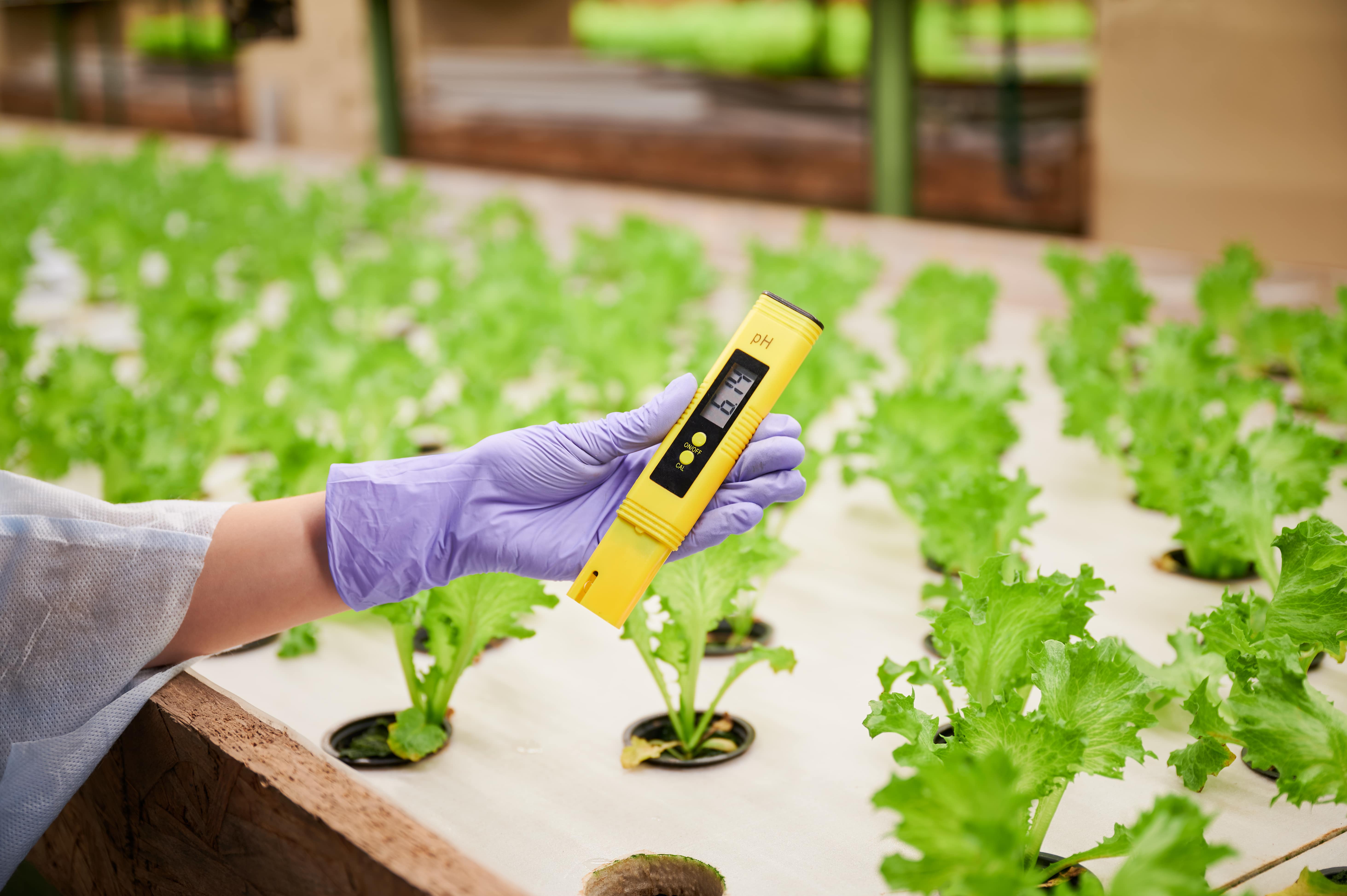
Success in hydroponic gardening depends on more than just placing a seed in water. In soil-free systems, water becomes the main source of nutrients — and that water needs to be just right. That’s where nutrient solutions, pH levels, and electrical conductivity (EC) come into play.
This guide will cover:
-Why nutrients matter in hydroponics
-How to prepare or purchase a nutrient solution
-What pH and EC mean, how to measure them, and why they’re critical
-How these values impact plant growth and how to fix imbalances
The Role of Nutrients in Hydroponics
In traditional farming, plants get nutrients from soil. In hydroponics, everything must be dissolved in water. That means:
-The better the nutrient solution, the healthier the plant.
-A poor balance can cause root rot, stunted growth, or nutrient burn.
Essential Nutrients for Plant Growth
Macronutrients:
-Nitrogen (N): supports leaf growth
-Phosphorus (P): helps with root and flower development
-Potassium (K): improves resistance and fruiting
Micronutrients:
-Calcium (Ca), Magnesium (Mg), Iron (Fe), Zinc (Zn), Boron (B)
Tip: For beginners, using pre-made hydroponic nutrient kits is a simple and reliable solution. These usually come in 2- or 3-part bottles with instructions on how to mix them properly.
How to Mix a Nutrient Solution
If using a pre-mixed set:
1. Start with clean water
2. Add the A and B nutrients one at a time — never mix them together first
3. Stir thoroughly
4. Measure and adjust pH and EC if needed
If preparing from raw ingredients:
-Purchase individual salts (like calcium nitrate, magnesium sulfate, etc.)
-Dissolve them in separate containers before adding to your reservoir
-Follow a strict recipe — incorrect ratios can harm your plants
Why pH Matters So Much
pH determines how acidic or alkaline your solution is. The ideal range in hydroponics is:
5.5 to 6.5
When pH is out of range:
-Nutrient absorption is blocked
-Deficiencies appear even when nutrients are present
-Root damage and growth issues occur
How to Measure and Adjust pH
-Use a digital pH meter for accuracy
-Check pH at least twice a week
-Use pH up/down solutions to adjust if needed
Understanding Electrical Conductivity (EC)
EC tells how much dissolved nutrient is in your water. In short:
-High EC = too many salts → risk of burning roots
-Low EC = not enough nutrients → poor growth
EC Ranges for Common Plants:
| Plant | Ideal EC (mS/cm) |
|---|---|
| Lettuce | 0.8-1.2 |
| Tomato | 2.0 – 3.5 |
| Basil | 1.0 – 1.6 |
| Spinach | 1.8 – 2.3 |
Measuring EC
-Use a digital EC or TDS meter
-Measure weekly or after adding new solution
-EC drops as plants absorb nutrients or as you top up with plain water
What Happens If Balance Is Off?
When pH or EC is not in the right range, plants react quickly:
-Yellowing leaves
-Brown spots or leaf curl
-Slow growth or root rot
-Leaf tip burn
Checkpoints:
-Did the water level drop?
-Did the pH drift too high or low?
-Is the EC too concentrated?
-Is the lighting and airflow still consistent?
Answering these will help trace the issue and correct it in time.
Pro Tips for Healthy Growth
-Keep nutrient water temperature between 18–22°C (65–72°F)
-Use gloves and eye protection when handling concentrated nutrients
-Refresh the reservoir weekly instead of just topping up
-Keep a grow log (pH, EC, plant condition) — it helps spot trends early
Final Thoughts
In hydroponics, nutrient and pH management is the heart of a thriving system. With the right balance, plants grow stronger, faster, and with better flavor.
While these numbers might seem technical at first, they become second nature with practice. Think of it like reading a plant’s language: it tells everything — if you’re willing to listen.